

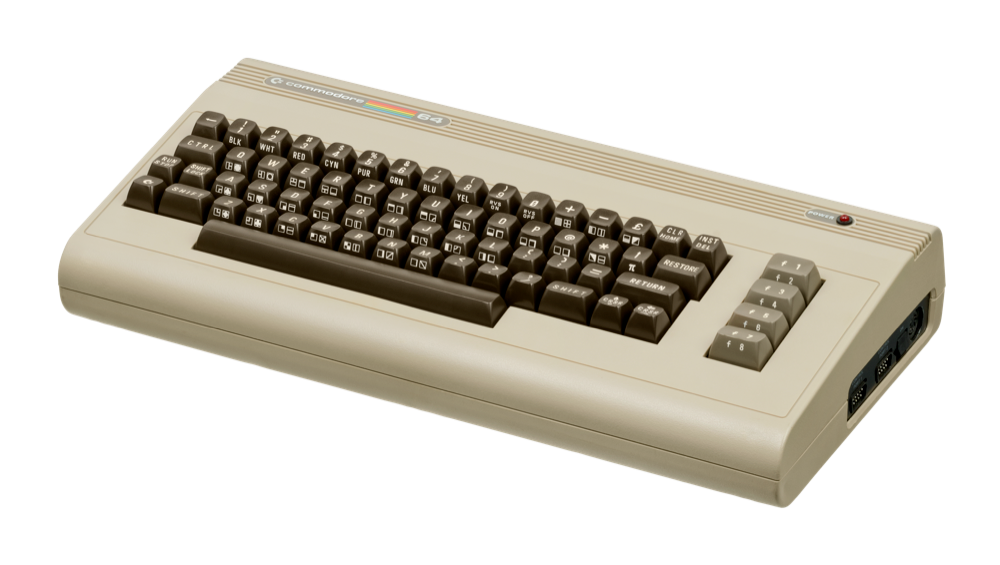
The Commodore 64 shipped in August 1982. Commodore priced it to sit in department stores, not only computer shops, and it followed the VIC-20 as a cheap 8-bit home computer. A MOS Technology 6510 ran at about 1.02 MHz on NTSC machines. The VIC-II drew 320×200 graphics, 16 colors, and hardware sprites. The SID (6581, later 8580) gave three analog voices, a filter, and the tone that still defines “computer game music” for a generation. 64 KB of RAM was the headline at launch. Games and software arrived on cartridge, cassette, and the 1541 5¼-inch floppy.
The game list is enormous. Impossible Mission set a cinematic platformer bar. The Last Ninja and International Karate showed what European studios could do on the SID and VIC-II. Boulder Dash, Paradroid, Turrican, and Ultima ports filled years of magazine cover tapes. The same chips fed a demoscene that treated raster tricks and SID tunes as sport.
Guinness still lists it among the best-selling single computer models. Researchers reading Commodore’s own reports put lifetime sales around 12.5 million; older executive figures run as high as 17 million. It stayed in production until April 1994, outliving the Commodore 128 and overlapping the Amiga. The Amiga and IBM PC compatibles took the living room next. The C64 remains the brown breadbox that made a personal computer ordinary—and left a SID soundtrack that emulators still chase.
Commodore 64 Technical Specifications
| Component | Specification |
|---|---|
| CPU | MOS Technology 6510 / 8500 @ 1.023 MHz (NTSC), 0.985 MHz (PAL) |
| Graphics | MOS VIC-II; 320×200; 16 colors; hardware sprites |
| Sound | MOS SID 6581 / 8580; 3 voices, filter, ADSR |
| Media | ROM cartridge; Compact Cassette; 1541 5¼-inch floppy |
| Memory | 64 KB RAM + 20 KB ROM |
| OS | Commodore KERNAL / BASIC 2.0; optional GEOS |
| Controllers | 2× CIA 6526 joystick ports; keyboard |
| Release Date | August 1982 |
| Units Sold | 12.5–17 million |