

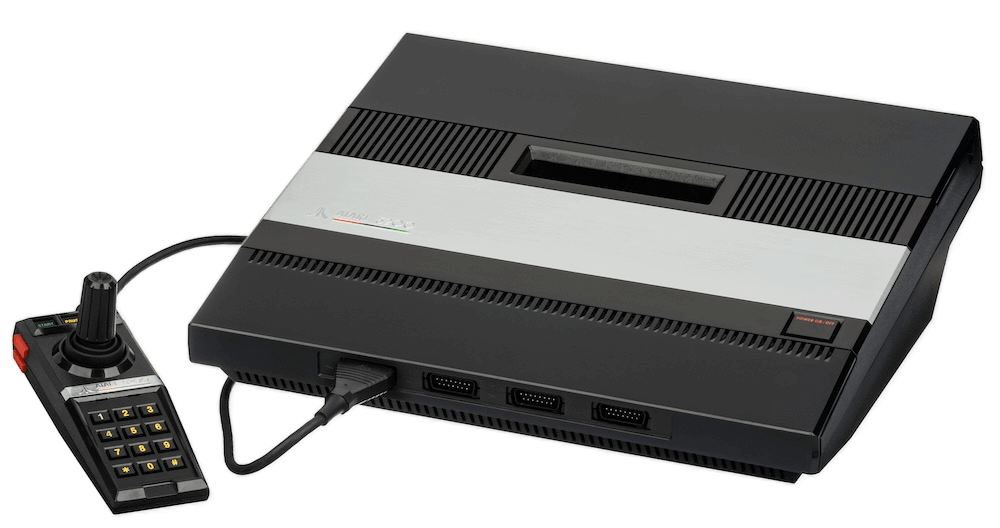
The Atari 5200 SuperSystem, released in November 1982, was Atari’s planned successor to the 2600. It reused the company’s 8-bit computer architecture—ANTIC, GTIA, and POKEY—so arcade ports could look and sound closer to the cabinet than they ever did on the VCS. Atari marketed it as a “super system,” hoping richer graphics would keep the living-room lead.
The library leaned on arcade conversions such as Pac-Man, Missile Command, Centipede, and Galaxian. Those ports were technically stronger than their 2600 counterparts, but at launch the 5200 could not play Atari 2600 cartridges, so households already sitting on a large VCS library had to buy in again. The non-centering analog joysticks drifted and frustrated players, while ColecoVision—out the same year—offered a firmer stick and, soon after, a 2600 adapter.
Atari discontinued the 5200 in 1984 after roughly one million units. It never repeated the 2600’s reach, and is often read as a sign of Atari losing its footing just before the 1983 crash: capable silicon, weak product decisions. Collectors now treat it as the bridge between the VCS era and the later 7800—a reminder that specs do not outrun controllers and compatibility.
Atari 5200 Technical Specifications
| Component | Specification |
|---|---|
| CPU | MOS 6502C @ 1.79 MHz |
| RAM | 16 KB |
| Graphics | ANTIC + GTIA — up to 320×192 |
| Colors | 256-color palette (up to 16 on screen) |
| Sound | POKEY chip (4 channels) |
| Media | ROM cartridges |
| Controllers | Analog joystick with keypad and side fire buttons (non-centering) |
| Release Date | November 1982 |
| Discontinuation | 1984 |
| Units Sold | ~1 million |